
LED Display Resource Center
From pixel pitch and screen types to installation, maintenance, and pricing, get clear answers to the most common questions asked before selecting an LED display for their project.
Years Experience
Countries Served
Projects Delivered
LED Cabinets Produced
Technical Support
Customer Satisfaction
An LED display is a flat screen built from thousands of individual light emitting diodes arranged in a grid, with each diode or small RGB cluster acting as a self-emissive pixel. Because the diodes generate their own light instead of relying on a backlight, LED displays scale modularly to almost any size and deliver higher brightness than backlit alternatives like LCD, which is why they are the standard choice for large format advertising, event, and venue screens.
An LED screen works by receiving a video signal from a source such as a media player or video processor, which a control system decodes and distributes to receiving cards inside each cabinet. Those receiving cards drive the red, green, and blue diodes in every pixel using rapid pulse width modulation, switching each one on and off many times per second to produce precise brightness and color, refreshing fast enough that the human eye sees one continuous image rather than individual flickers.
LED displays are built from individual, modular light emitting diodes and can scale to almost any size by adding cabinets, while LCD screens use a single backlit panel with a fixed, non-expandable size. This modularity is also why LED displays generally offer higher brightness, wider viewing angles, and better outdoor performance than LCD panels.
Dreamway manufactures indoor LED displays, outdoor LED screens, and rental LED screens, along with fine pitch, transparent, flexible, and floor LED display options. Each type is engineered around a specific environment and viewing distance, so the right choice depends on where and how the display will be used.
An LED display built with high quality components and maintained properly have a theoretical operational lifespan of up to 100,000 hours, which works out to well over a decade of daily commercial use. Actual lifespan depends on factors like operating brightness, ambient temperature, and how consistently the display is cleaned and serviced.
Yes, though not interchangeably. LED technology itself works the same way indoors and outdoors, but Dreamway builds separate indoor and outdoor product lines because the brightness, pixel pitch, and weatherproofing each environment needs are different enough that a single display cannot perform well in both.
Performance depends on pixel pitch, brightness, refresh rate, color calibration, and contrast ratio, since a display can be bright yet still look washed out if its contrast and color accuracy are not properly tuned. Our guide on LED display contrast ratio breaks down why this factor matters as much as brightness for perceived image quality.
LED displays require minimal ongoing maintenance when built with quality components, typically just routine visual checks, occasional cleaning, and periodic firmware updates. Dreamway’s modular cabinet design also allows front or rear access to individual modules, so any issue can be addressed without dismantling the entire screen.
Start by defining three things yourself: your viewing environment, your typical viewing distance, and your budget, since these determine which pixel pitch and brightness range are realistic before you even look at specific products. Once you have those, our team can narrow the options down to a configuration that actually fits.
Screen size depends on your viewing distance, available space, and the type of content you plan to display, since text and detailed graphics need more physical size to stay legible than simple video content does. As a general rule, longer viewing distances allow for a larger overall screen with a coarser pixel pitch.
Pixel pitch is the distance in millimeters between the centers of two adjacent pixels, and it is the single most important spec because it determines both resolution and minimum viewing distance. A smaller pixel pitch packs more pixels into the same area, producing a sharper image at closer range. Our complete guide to choosing LED display resolution walks through how to match pixel pitch to your specific viewing distance.
Indoor environments generally call for a fine pixel pitch between P1.2 and P2.5, since viewers are often standing just a few meters from the screen and need crisp detail for text, logos, and video content without visible pixelation.
Outdoor screens are typically viewed from much farther away, so pixel pitches between P3.9 and P6.67 work well for most applications, balancing sharp image quality with lower cost per square meter across large advertising or stadium sized screens.
The farther viewers stand from the screen, the larger the pixel pitch can be without the individual pixels becoming visible or the image losing clarity. As a rule of thumb, the minimum comfortable viewing distance in meters is roughly equal to the pixel pitch in millimeters.
Indoor displays typically need 500 to 1,200 nits to look natural under normal indoor lighting, while outdoor screens require 5,000 to 7,000 nits or more to stay clearly visible against direct sunlight. Choosing a brightness level too low for the environment results in a washed out, hard to read display.
Outdoor LED displays generally need an IP65 rating on the front panel and an IP54 rating on the rear panel, since the front faces direct rain and dust exposure while the rear only needs protection from splashing water and dust ingress.
Outdoor advertising typically needs a higher brightness outdoor LED screen with strong sunlight readability and a wider viewing angle for passing traffic, while indoor retail advertising suits a finer pitch display for closer viewing distances. For dedicated commercial and roadside applications, our advertising LED screen solutions are engineered specifically for this use case.
Dreamway builds dedicated solutions for each of these environments, including church LED screens engineered for lyric and video clarity across a sanctuary, stadium LED screens built for large scale, high brightness viewing, and rental LED screens for temporary event installations that need to move between venues.
The two are built to different spec sheets. Indoor displays use a finer pixel pitch, typically 500 to 1,200 nits of brightness, and standard cabinet housings suited to controlled lighting. Outdoor displays use a coarser pixel pitch, 5,000 nits or higher brightness, and IP rated, weather sealed housings built to survive rain, dust, and temperature swings.
Standard indoor LED displays are not built to handle moisture, temperature swings, or direct sunlight, and using one outdoors will shorten its lifespan considerably. For any outdoor installation, we recommend a purpose built outdoor screen with the correct IP rating and brightness for the environment.
Dreamway’s outdoor LED screens carry IP65 front and IP54 rear protection as standard, which shields internal components from rain, dust, and humidity while maintaining stable electrical performance across a wide range of outdoor weather conditions.
Outdoor LED screens are engineered with high nit brightness levels, often 5,000 nits or more, combined with wide color gamut LED lamps and anti-glare surface treatments that together keep visuals clear, vibrant, and readable even under direct midday sun.
Dreamway seals outdoor cabinets to their rated IP standard, uses corrosion resistant materials in the housing and hardware, and equips displays with certified, moisture protected power supplies, all of which work together to protect internal electronics from long term weather exposure.
Most outdoor applications perform well between 5,000 and 7,000 nits, though locations with intense direct sunlight or high ambient reflected light, such as glass fronted buildings, may call for brightness levels above 7,000 nits to remain fully visible.
Outdoor screens can be wall mounted, pole mounted, or freestanding on a steel frame, depending on the site conditions. Dreamway’s engineering team assesses your location, screen size, and local wind or weather loads to recommend the safest structural approach.
Indoor displays can be wall mounted, hung from a truss or rigging system, or freestanding on a mobile frame, and the right method depends on the venue layout, ceiling access, and how often the display needs to be relocated.
Yes, customization is available across nearly every display we manufacture, from cabinet dimensions and shape to brightness, control system, and finish. Our engineering team works from your venue and application details to configure a display that fits your project exactly, rather than adapting your project to a standard model. You can read more about our manufacturing capabilities on our About page.
Cabinet size, shape, pixel pitch, brightness, IP rating, control system, and installation hardware can all be tailored to your project. Dreamway’s engineering team works directly with you to configure every one of these details before production begins.
Yes, Dreamway manufactures cabinets in custom dimensions to fit sanctuary walls, stage backdrops, retail spaces, and irregular architectural features, so the display fits the space precisely instead of forcing the space to accommodate a standard size.
Yes, Dreamway produces curved, concave, convex, and flexible LED modules with a curve range of up to plus or minus 15 degrees, which makes them suitable for immersive, wraparound, or architecturally shaped installations. Our 3D LED screen solutions are built specifically for this kind of eye-catching, non-flat display.
Yes, Dreamway supports both OEM, where we manufacture to your exact specifications and branding, and ODM, where our engineering team designs the display from concept, giving distributors and integrators full flexibility to bring their own product to market.
Yes, our engineering team develops a custom design based on your space, application, and budget, including detailed CAD drawings and hardware specifications. See how this approach comes together in our case study on custom LED displays for casino environments.
Yes, Dreamway provides detailed CAD drawings and steel structure documentation to support your installation planning, giving your team or local contractor everything needed to prepare the site accurately ahead of delivery.
Yes, this is part of our custom project process. Once you share your venue drawings, application, and target budget, our engineers translate those inputs into a specific configuration, including pixel pitch, cabinet layout, and power requirements, rather than pointing you toward a generic spec sheet. Get a free consultation to start that conversation.
Installation follows a structured sequence: our team reviews your venue and structural drawings, cabinets are mounted using the method suited to your site, modules are cabled and connected to the control system, and the full display is calibrated and tested before handover. Dreamway supports this process with remote guidance from planning through final testing.
Dreamway supports wall mounted, hanging, and freestanding installations, each suited to different needs, from permanent retail displays to temporary setups used at events and exhibitions. Our comparison of fixed installation versus rental LED displays explains which approach fits different use cases.
Yes, Dreamway provides step by step installation documentation, wiring diagrams, and mounting instructions specific to your cabinet configuration, so your local team knows exactly how each module connects, powers up, and locks into the structure before work begins on site.
Yes, Dreamway supplies steel structure drawings for projects that require a custom mounting frame, helping your local contractor build a structurally safe and correctly sized support ahead of installation day.
Most standard installations are supported remotely through video calls and documentation, which covers the majority of projects without needing a technician on site. For larger venues, complex curved installations, or first time integrators, we can arrange on site engineering support to supervise the build directly.
Routine maintenance includes periodic cleaning of the screen surface, checking cabinet connections for a secure fit, and keeping the control system firmware updated. Dreamway’s modular cabinet design allows fast, front or rear access for any servicing needs.
Most commercial LED displays benefit from a basic inspection every few months, though the ideal schedule depends on the environment, with outdoor and high dust locations generally needing more frequent checks than indoor installations.
Yes, Dreamway’s modular design allows individual modules to be removed and replaced without affecting the rest of the display, which keeps downtime minimal and avoids the cost of replacing the entire screen for a single fault.
Check the module’s power and data cable connections first, since a loose connection is the most common cause of a dark or malfunctioning module. If reseating the cables does not resolve it, contact Dreamway’s technical support team with your display model and a description of the fault. Our step by step guide on troubleshooting a floor LED display covers the same diagnostic checks that apply across other display types.
Yes, once installation is complete our team stays available to fine tune calibration, resolve any initial configuration issues, and confirm the display is performing to spec, so you are not left to troubleshoot alone during the first few weeks of operation.
There is no single price for an LED display, since cost scales with screen size, resolution, and how the display will be used. Rather than publish a flat rate that would not reflect your actual project, we recommend sharing your project scope so our team can return an accurate, itemized quote within 12 hours.
Pixel pitch, brightness, IP rating, cabinet material, and control system all influence the final price, along with order volume, since larger orders benefit from better per-unit manufacturing efficiency. Custom OEM or ODM requirements can also affect the final cost.
Yes, a finer pixel pitch generally costs more, since it requires a higher density of LED components packed into the same cabinet area, along with more precise manufacturing to keep those components properly aligned.
Yes, larger screens require more cabinets, modules, and control hardware, which increases the overall cost proportionally. Dreamway’s factory direct pricing helps keep large scale projects competitive despite the added component count.
Yes, share your project details, including venue, size, and application, through our contact page and our team will respond with a tailored proposal within 12 hours based on your specific requirements.
We typically need your screen size or wall dimensions, intended viewing distance, whether the installation is indoor or outdoor, and the primary application, since these details determine the right pixel pitch and overall configuration for an accurate quote.
Dreamway maintains a low minimum order quantity to keep the process accessible for distributors, integrators, and single project buyers alike, without requiring bulk volume commitments to access factory direct pricing.
Production timelines depend on order size and the level of customization involved, with standard configurations moving faster than fully custom OEM builds. Our team provides a clear production schedule alongside your quote so you can plan installation and delivery around it.
Yes, Dreamway is a factory direct manufacturer rather than a trading company, which means pricing reflects our actual production cost without the added markup that comes from buying through a middleman.
Reach out through our contact form, email, or WhatsApp with your project details, and our team will respond within 12 hours with pricing and configuration recommendations tailored to your application.
Dreamway operates its own factory in Weicheng Industrial Park, Shenzhen, China, where every display is engineered, assembled, and tested before shipping worldwide. Our article on why global distributors choose Chinese LED display manufacturers explains the supply chain advantages behind that decision.
Dreamway is a factory direct manufacturer, controlling every stage of production from PCB assembly to cabinet manufacturing, which allows for consistent quality and full OEM and ODM customization. Our guide comparing an LED display manufacturer versus a trading company explains what that distinction actually means for bulk buyers.
Every display moves through a multi stage quality control process, starting with incoming inspection of raw components like LED chips and PCBs, followed by in-process checks during assembly, and closing with module level and full display aging tests before any unit is approved for packaging.
Dreamway LED displays carry CE, RoHS, FCC, CB, and ISO certifications, which together confirm compliance with international safety, environmental, and quality management standards across the major markets we ship to.
Yes, our products for the European market comply with CE-EMC, CE-LVD, and RoHS standards. You can request official test reports and certificate PDFs from our sales team for your local market compliance.
Yes, Dreamway outdoor and indoor displays carry FCC certification to meet North American electromagnetic compatibility standards. Full technical compliance data is available upon request.
Dreamway uses premium high binning LED lamps, multilayer PCBs, advanced driver ICs, and certified power supplies to deliver stable performance, accurate color, and long term reliability. Our comparison of SMD versus DIP LED display technology explains how the choice of LED package itself affects image quality and durability.
Before a completed order ships, every cabinet is powered on and run through a final visual and electrical check, screened for dead pixels, color uniformity across seams, and joint alignment, so any defect is caught at the factory rather than after installation.
Yes, Dreamway provides detailed specification sheets, certification documents, and technical drawings for every LED display, supporting your internal approvals, customs clearance, and installation planning.
Yes, international shipping is standard for every order, whether it is a single display or a large multi-container project. We work with established freight partners to manage export documentation and coordinate delivery to your local port or address.
Dreamway has delivered projects across more than 50 countries, including markets throughout Europe, the Middle East, Africa, Asia, and the Americas, supporting distributors, integrators, and contractors worldwide.
Every display is packed in heavy duty flight cases designed to protect cabinets, modules, and internal electronics during long distance transport, significantly reducing the risk of damage in transit.
Air freight typically takes 5–7 business days, while sea freight takes 20–35 days depending on the destination port.
Yes, Dreamway includes more than 3 percent spare parts with every order at no additional cost, which lets you handle minor repairs on site quickly without waiting on a new shipment from the factory.
Beyond the initial installation period, Dreamway backs every display with 24/7 technical support and a lifetime commitment to service, not just coverage during the warranty term. Our support desk handles everything from routine questions to complex diagnostics for as long as you operate the display.
Yes, our experienced engineers train your in house technical team on installation, routine maintenance, and basic troubleshooting, so your staff can manage the display confidently once our team has stepped back.
Reach out with your order number and a description of what you are seeing, whether that is a display fault, a configuration problem, or a question about coverage. Our team will confirm whether the issue falls under warranty and outline the next steps, including any replacement parts that need to ship.
Yes. Dreamway provides a standard 1-year factory warranty for all LED displays, which can be extended to 2 years upon request. During the warranty period, if any component becomes defective, simply ship it back to our factory for expert repair or replacement, and we will send it back to you. Combined with the free spare parts included in your initial shipment, this ensures your displays experience minimal downtime.
Reach our technical support team by email, phone, or WhatsApp, or submit a request through our contact page, and we will respond within 12 hours.
Whether it’s pixel pitch, brightness, IP rating, or cabinet design, our engineers can help you get the specifications right before you order. Reach out, and we’ll get back to you within 12 hours.
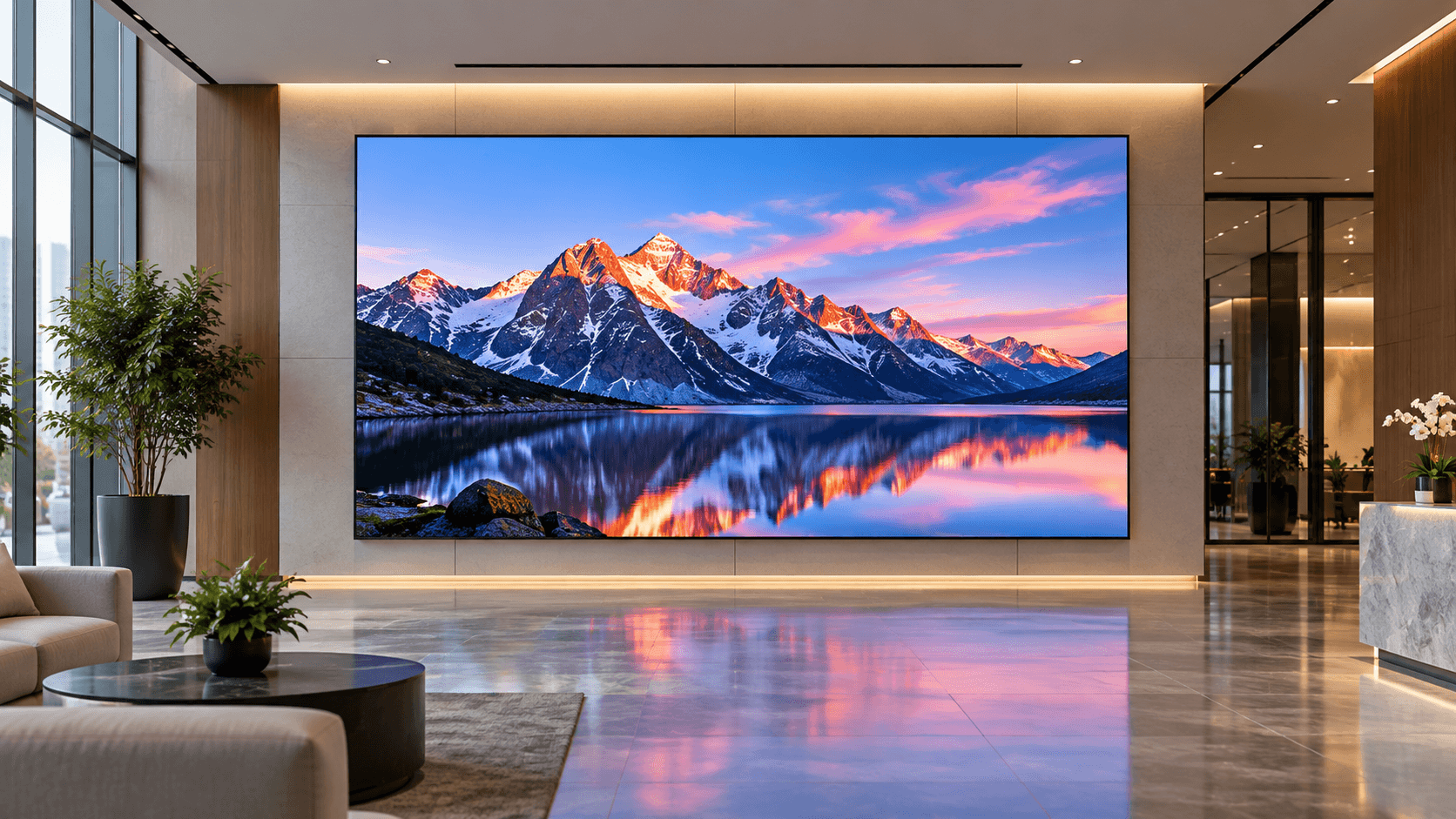
High-definition, seamless displays optimized for indoor control rooms, retail, and corporate environments.EXPLORE
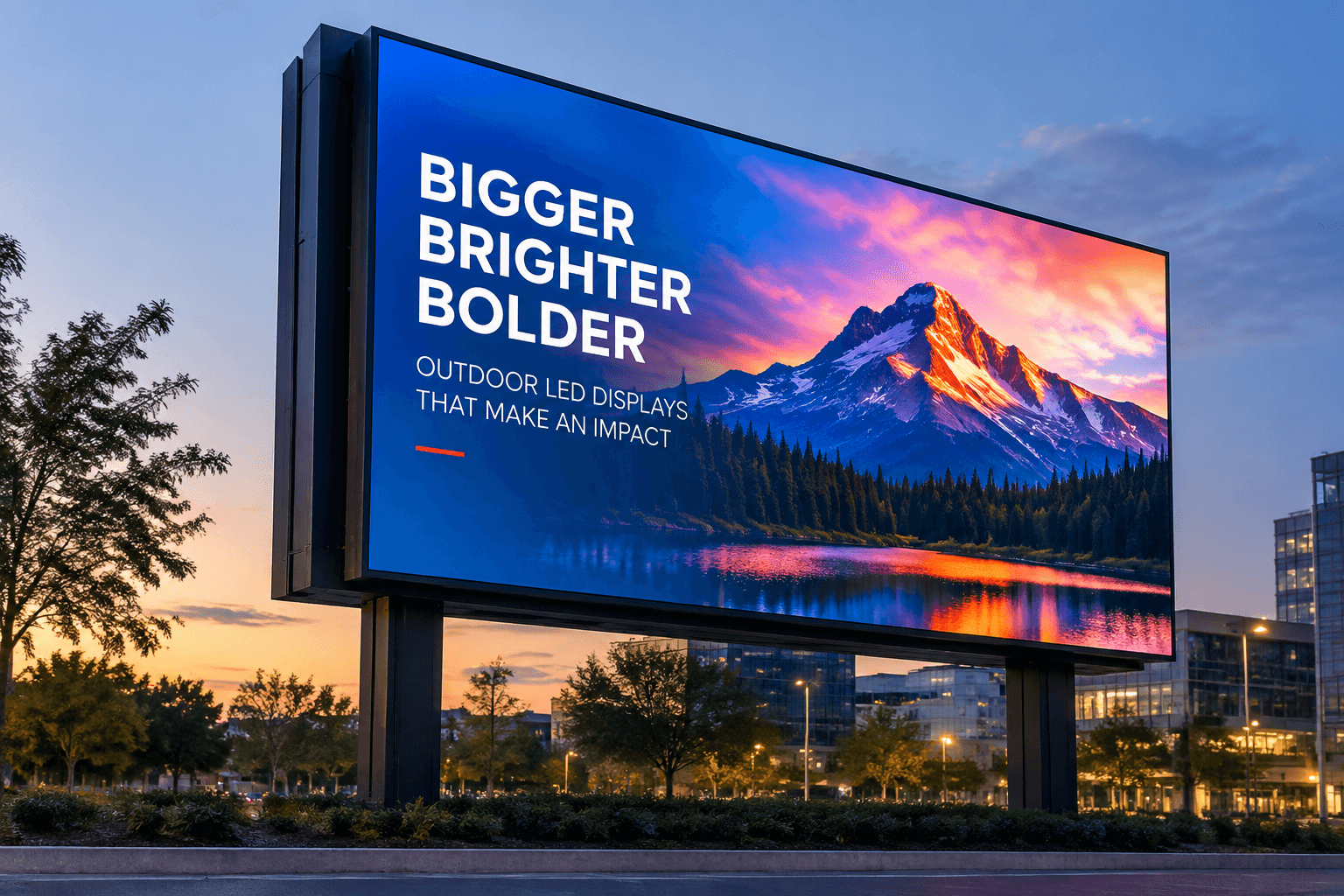
High-brightness, IP65 weatherproof displays designed for maximum sunlight readability and durability.EXPLORE
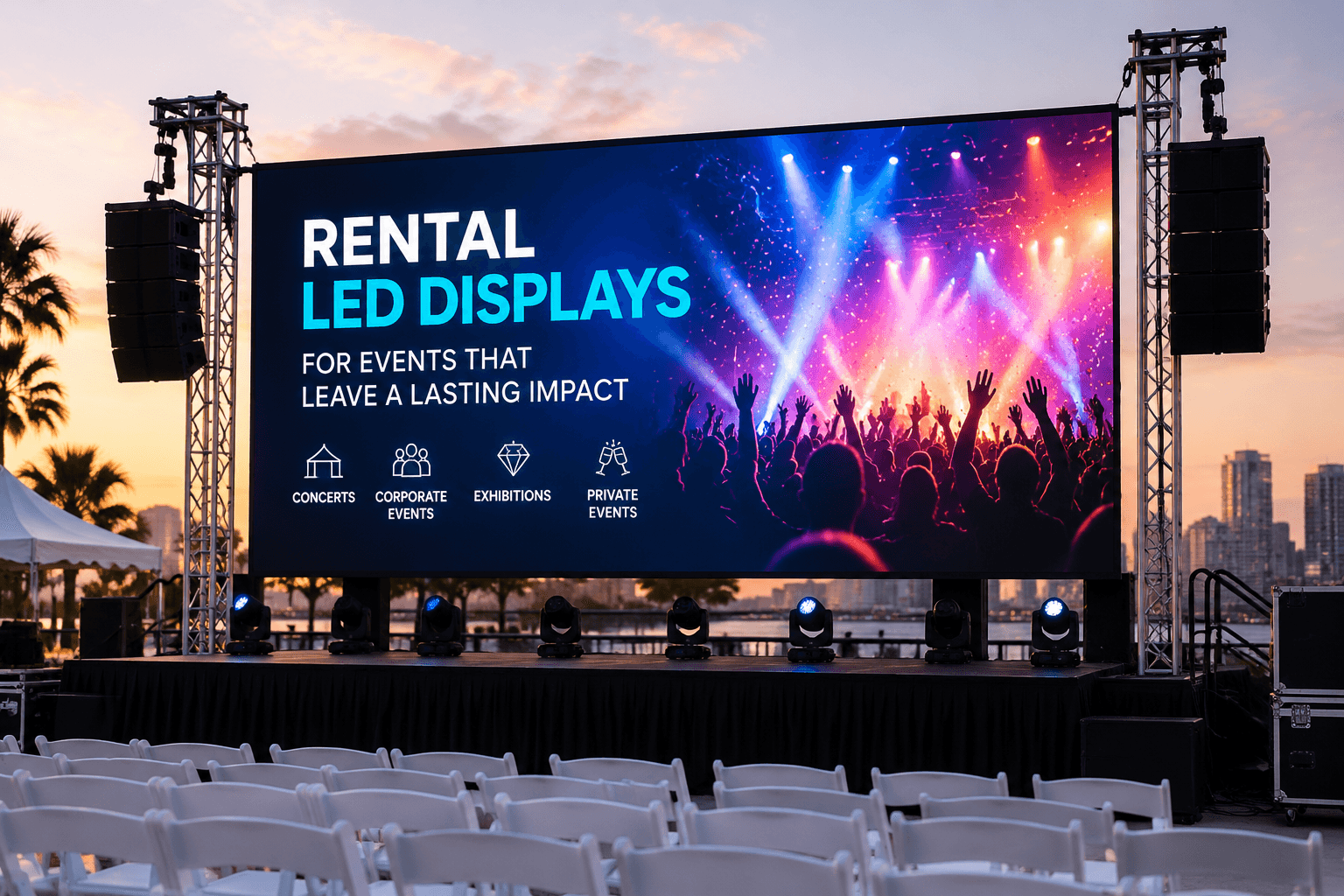
Lightweight, fast-assembly display panels built for stage events, exhibitions, and temporary setups.EXPLORE
We would contact you within 12 Hours.