Table of Contents
Key Takeaways
|
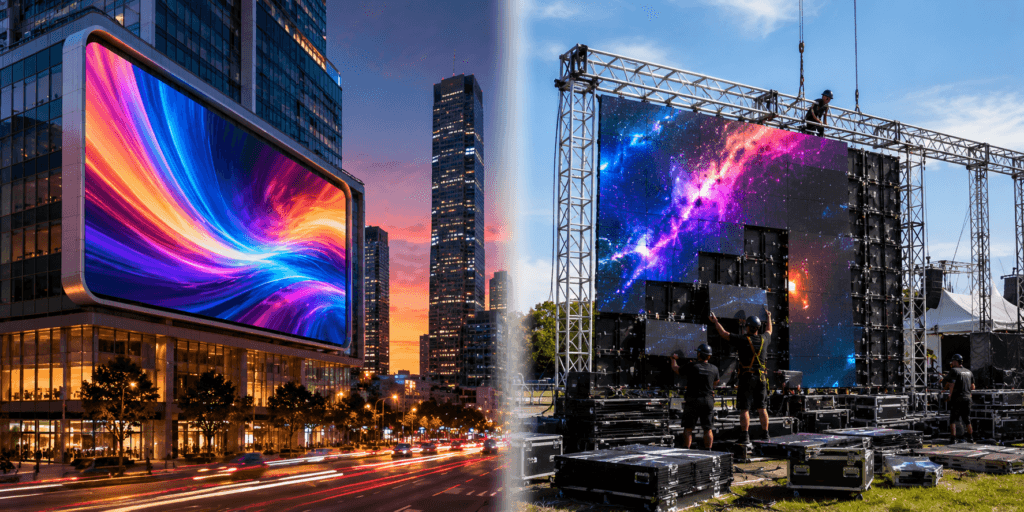
A permanent LED screen can be a smart investment for a stadium, retail space, or corporate venue, but not every project needs one. For a concert, trade show, or touring event, a rental display may offer the flexibility you actually need.
The decision comes down to more than upfront cost. Usage frequency, installation location, project duration, maintenance, and mobility can all affect which option makes more sense.
The growing demand for both permanent and temporary LED solutions reflects the range of applications available today. Fixed LED displays accounted for 62.35% of global market revenue in 2025, while rental and mobile solutions are projected to grow at a 6.78% CAGR through 2031.
These trends highlight why businesses have different display options depending on their location, usage, and event requirements.
In this guide, we’ll break down the key differences between fixed and rental LED displays to help you choose the right solution for your project.
What Is a Fixed Installation LED Display?
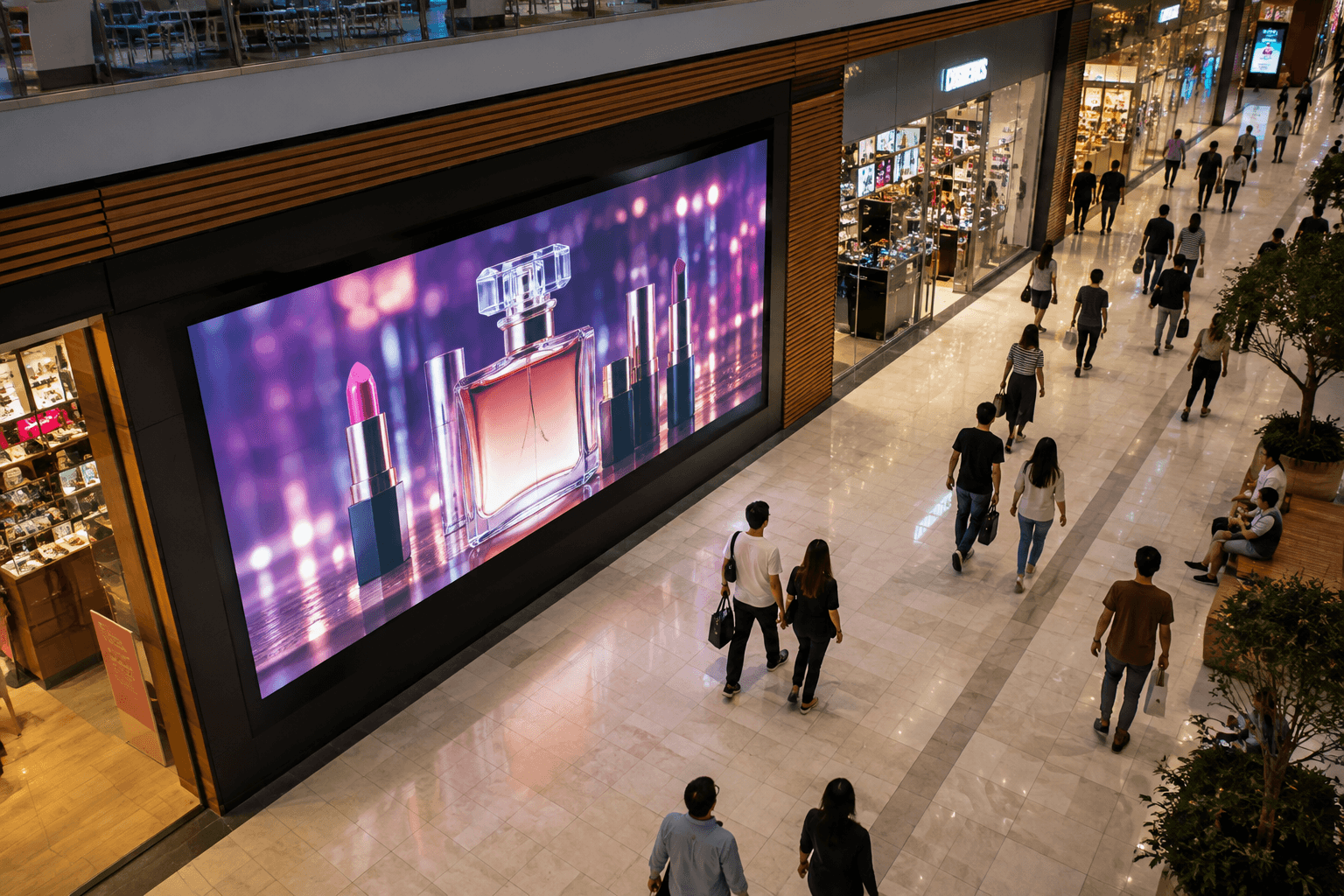
A fixed installation LED display is a permanent digital screen designed to remain in one location for long-term use. Unlike rental displays, it becomes part of the venue’s infrastructure and can be used continuously for applications such as advertising, information sharing, entertainment, or brand communication.
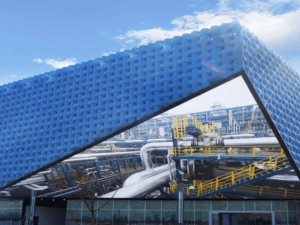
Fixed LED displays are commonly installed on building facades, retail storefronts, stadiums, airports, corporate lobbies, and other permanent locations. Their design focuses on durability, reliable performance, visibility, and site-specific customization.
Why Businesses Choose Fixed Installation Over Time
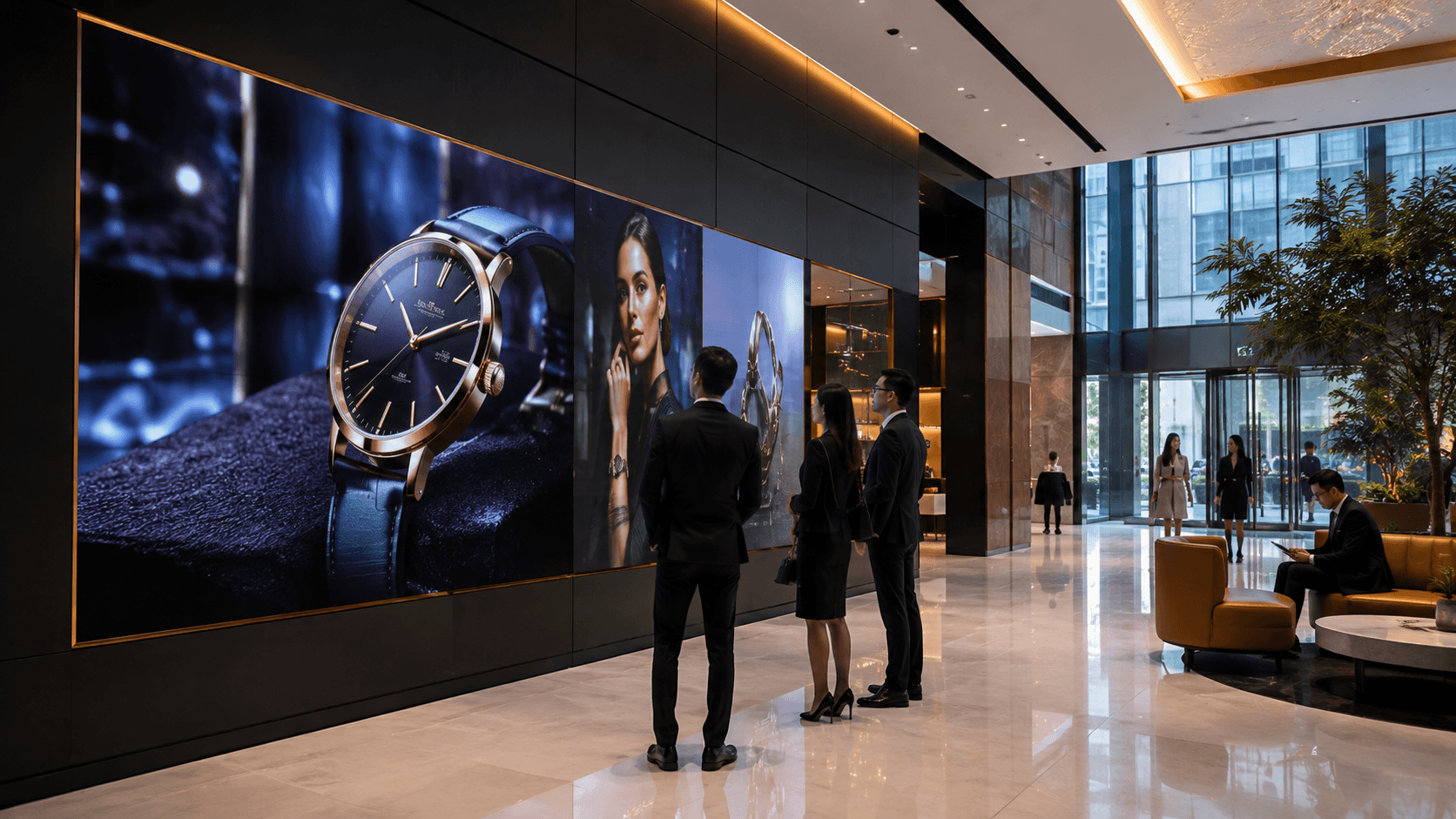
Fixed installation can be a practical choice when a business needs an LED display at the same location for years or expects frequent use.
Key advantages include:
- Long-term use: A fixed display is designed for extended operation without repeated setup and teardown.
- Consistent visibility: Businesses can keep branding, advertising, or information visible throughout operating hours or continuously when required. Advertising LED screens can support these long-term promotional and brand communication needs.
- Custom installation: Screen size, pixel pitch, mounting structure, brightness, and other specifications can be tailored to the location and viewing conditions.
- Reduced setup requirements: Once professionally installed, there is no need to transport or assemble the display for every event.
- Reliable performance: Permanent installations can be engineered around the venue’s electrical, structural, environmental, and operational requirements.
| Quick Insight Fixed installation is generally more suitable when the display will remain in one location and be used frequently or continuously. |
What Makes Fixed Displays Built to Last?
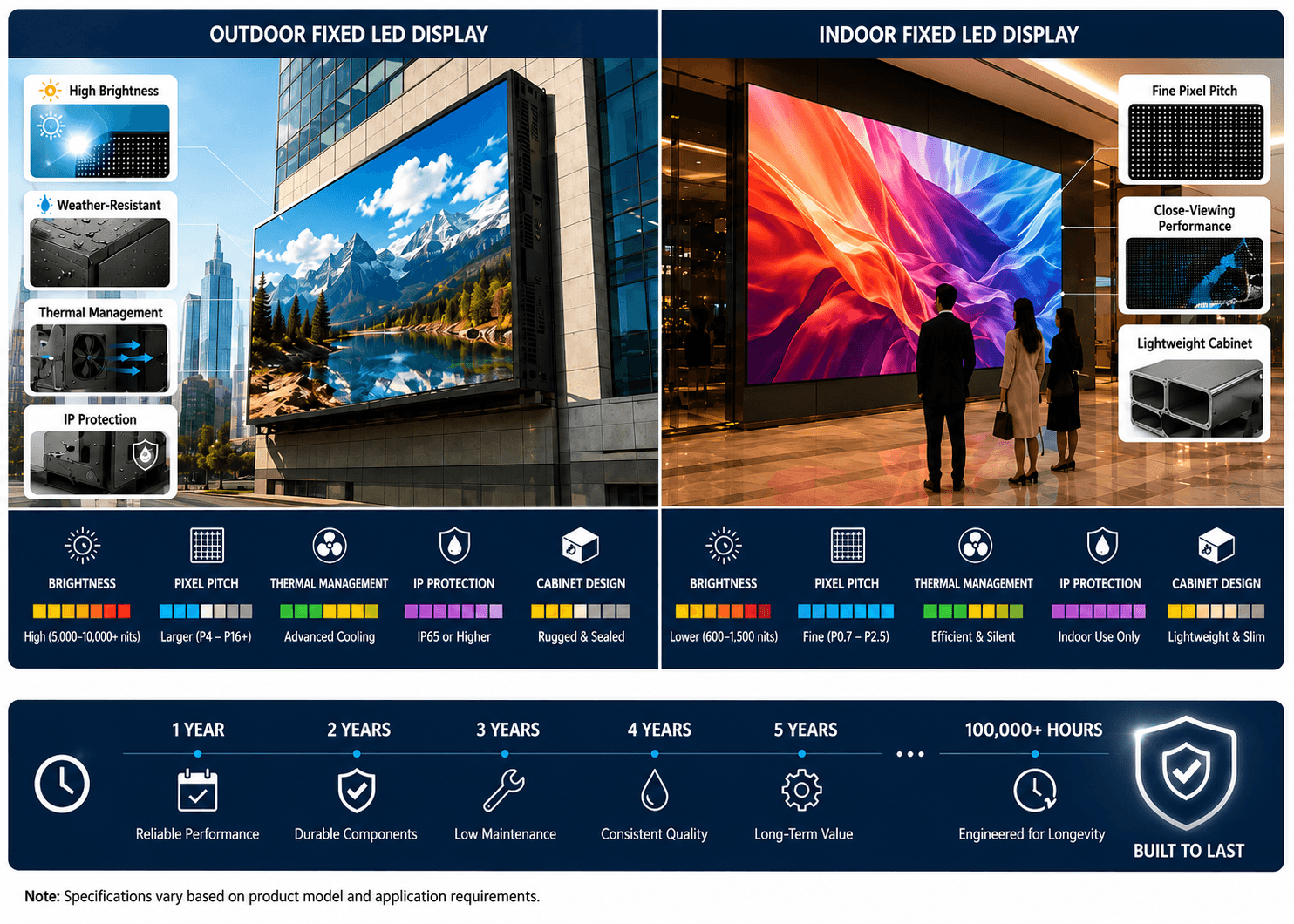
Fixed LED displays are designed around the conditions of their permanent environment. Outdoor models may require weather-resistant cabinets, higher brightness, thermal management, and appropriate IP protection, while indoor displays can prioritize fine pixel pitches and close-viewing performance.
Important specifications include:
- Brightness: Outdoor displays typically require higher brightness to remain visible in direct sunlight.
- Pixel pitch: Fine-pitch displays suit closer viewing distances, while larger pixel pitches are commonly used for outdoor screens viewed from farther away.
- Weather protection: Outdoor installations may use IP-rated cabinets to protect against dust and moisture.
- Thermal management: Proper cooling helps maintain stable performance during extended operation.
- Customized steel or aluminum frames: Fixed displays use customized steel or aluminum frames designed around the site’s dimensions, mounting requirements, structural conditions, and long-term installation needs.
- Front or rear service access: Fixed LED displays can be configured for front or rear maintenance access depending on the installation structure and available space around the screen.
- Cabinet construction: Materials and structural design are selected according to installation conditions, durability requirements, and the intended environment.
- Lifespan: LED components can be rated for very long operating hours, although actual service life depends on usage, environment, component quality, and maintenance.
The right specifications should always be selected according to the project rather than using one configuration for every installation.
Why Professional Setup Matters for Installing an LED Display
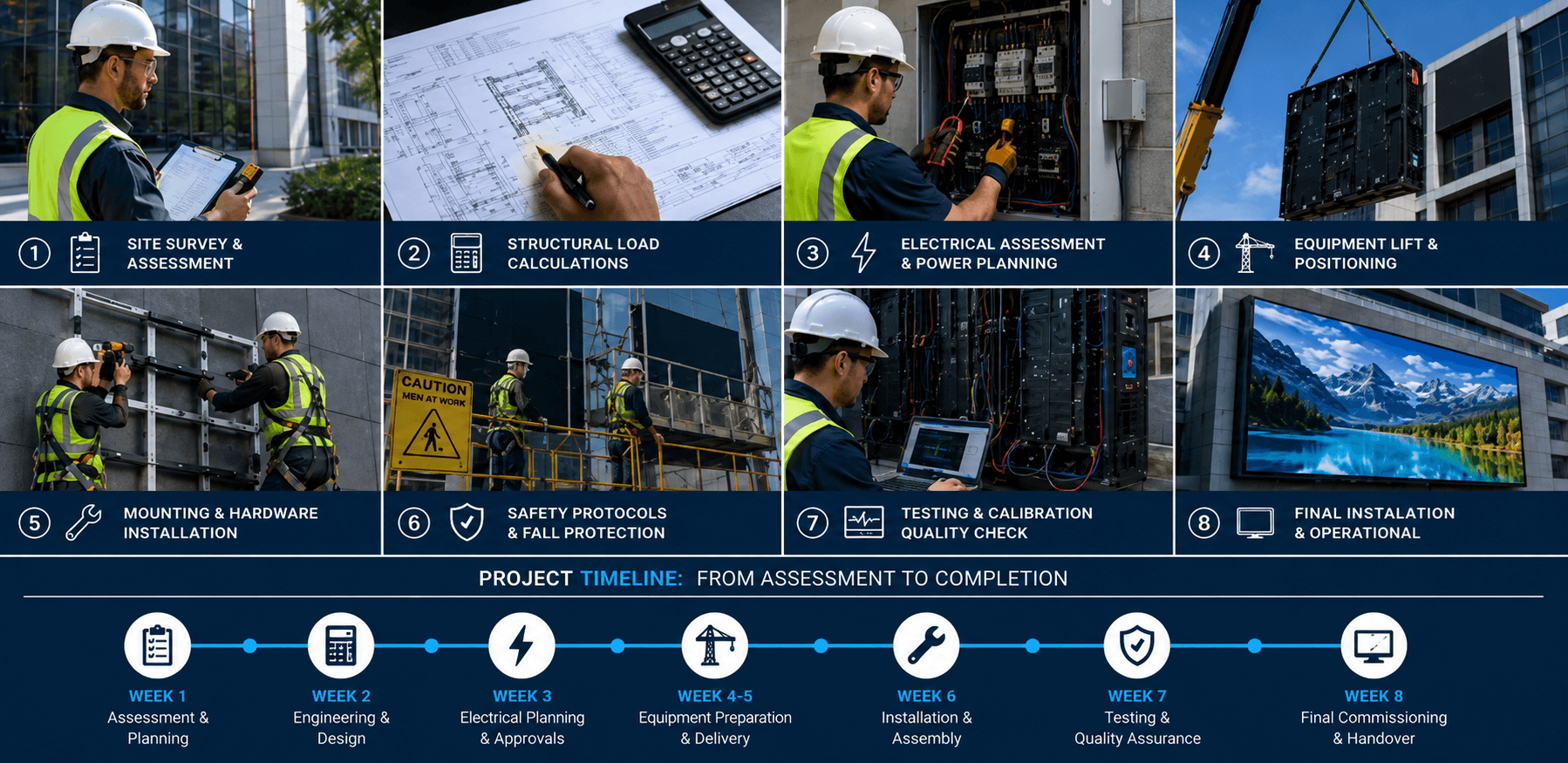
A fixed LED display requires more than mounting a screen to a wall. Professional installation typically begins with a site survey and assessment of:
- Structural load and mounting requirements
- Electrical capacity and power requirements
- Viewing distance and angles
- Sunlight and environmental conditions
- Weatherproofing for outdoor installations
- Local permits, codes, and safety requirements
Depending on the location, displays may be wall-mounted, pole-mounted, roof-mounted, ground-mounted, or installed on a custom structural frame. Project timelines vary significantly based on screen size, site conditions, structural work, and electrical requirements.
How Do You Maintain an LED Display Long-Term?
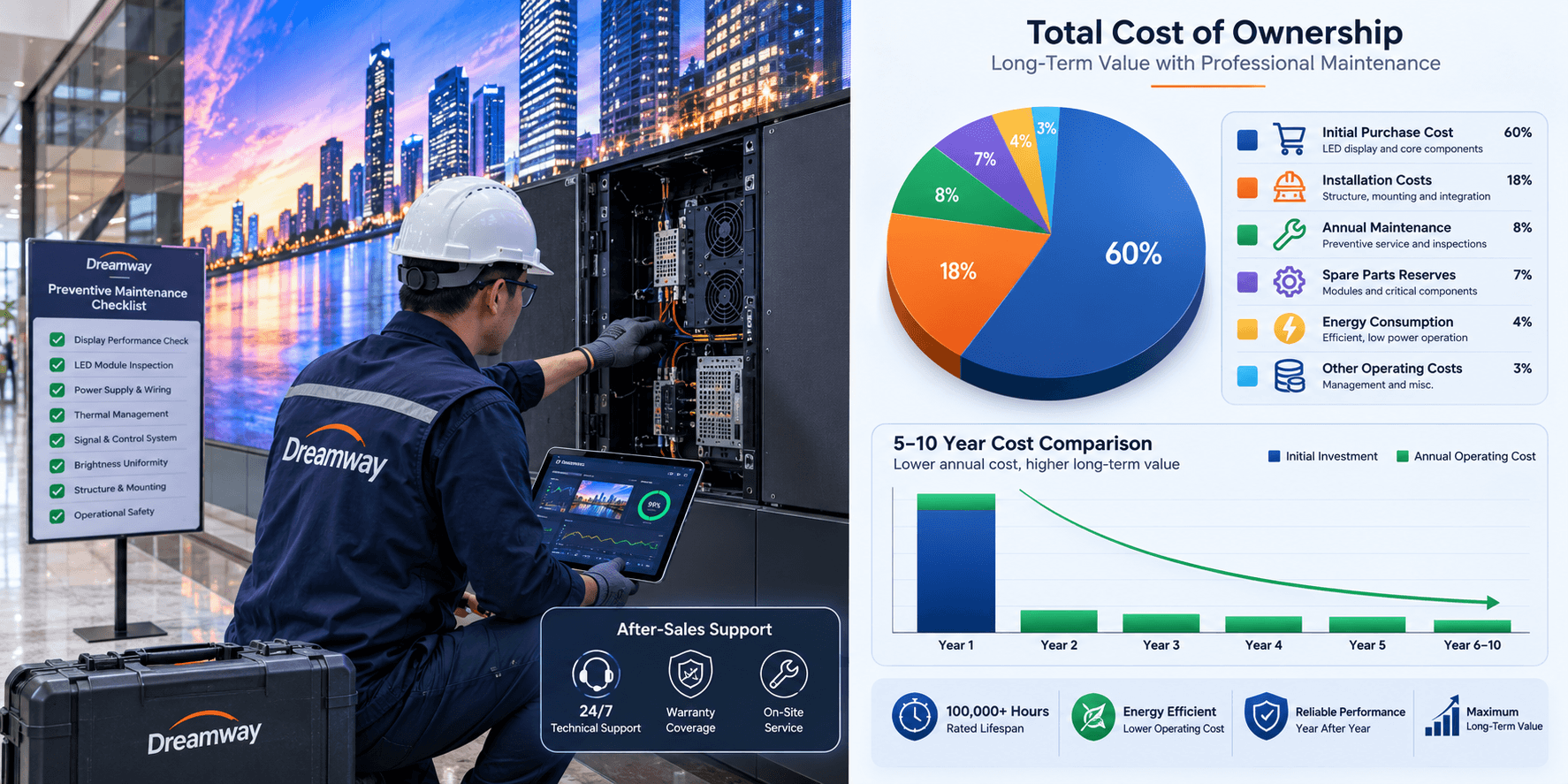
Long-term performance depends on proper maintenance and regular monitoring. Routine inspections can help identify issues with electrical connections, power supplies, thermal management, structural components, software, and LED modules before they affect display performance.
For fixed LED displays, maintenance may include:
- Electrical inspections: Check power supplies, connections, and cabling for potential issues.
- Thermal management: Ensure cooling systems and ventilation are working properly.
- LED module checks: Inspect modules for performance issues and replace damaged components when necessary.
- Structural inspection: Check mounting structures, cabinets, and hardware for signs of wear.
- Software and system updates: Keep control systems and related software properly maintained.
- Regular cleaning: Remove dust and debris according to the manufacturer’s maintenance recommendations.
What Is Included in an LED Display’s Total Cost of Ownership?
The total cost of ownership extends beyond the initial purchase price. Over a 5–10 year period, businesses should consider installation, maintenance, spare parts, energy consumption, and other operating expenses when evaluating the long-term value of an LED display.
The infographic breaks down these costs as follows:
- Initial purchase cost: 60% of the total cost
- Installation costs: 18%
- Annual maintenance: 8%
- Spare parts reserves: 7%
- Energy consumption: 4%
- Other operating costs: 3%
Why Does Professional Maintenance Matter?
Professional maintenance can help control avoidable repair costs, support consistent performance, and extend the useful life of an LED display. Many LED displays are rated for 100,000+ hours of operation, although actual lifespan depends on component quality, usage, operating conditions, and maintenance.
Professional support can also help keep the display operating reliably over time. Dreamway provides:
- Technical assistance: Support for ongoing display operation and troubleshooting.
- Installation guidance: Assistance with proper installation and system setup.
- Training: Guidance to help teams operate and manage the display effectively.
- Remote troubleshooting: Support for diagnosing and resolving technical issues.
- After-sales support: Continued assistance throughout the display’s operational life.
What Is a Rental LED Display?
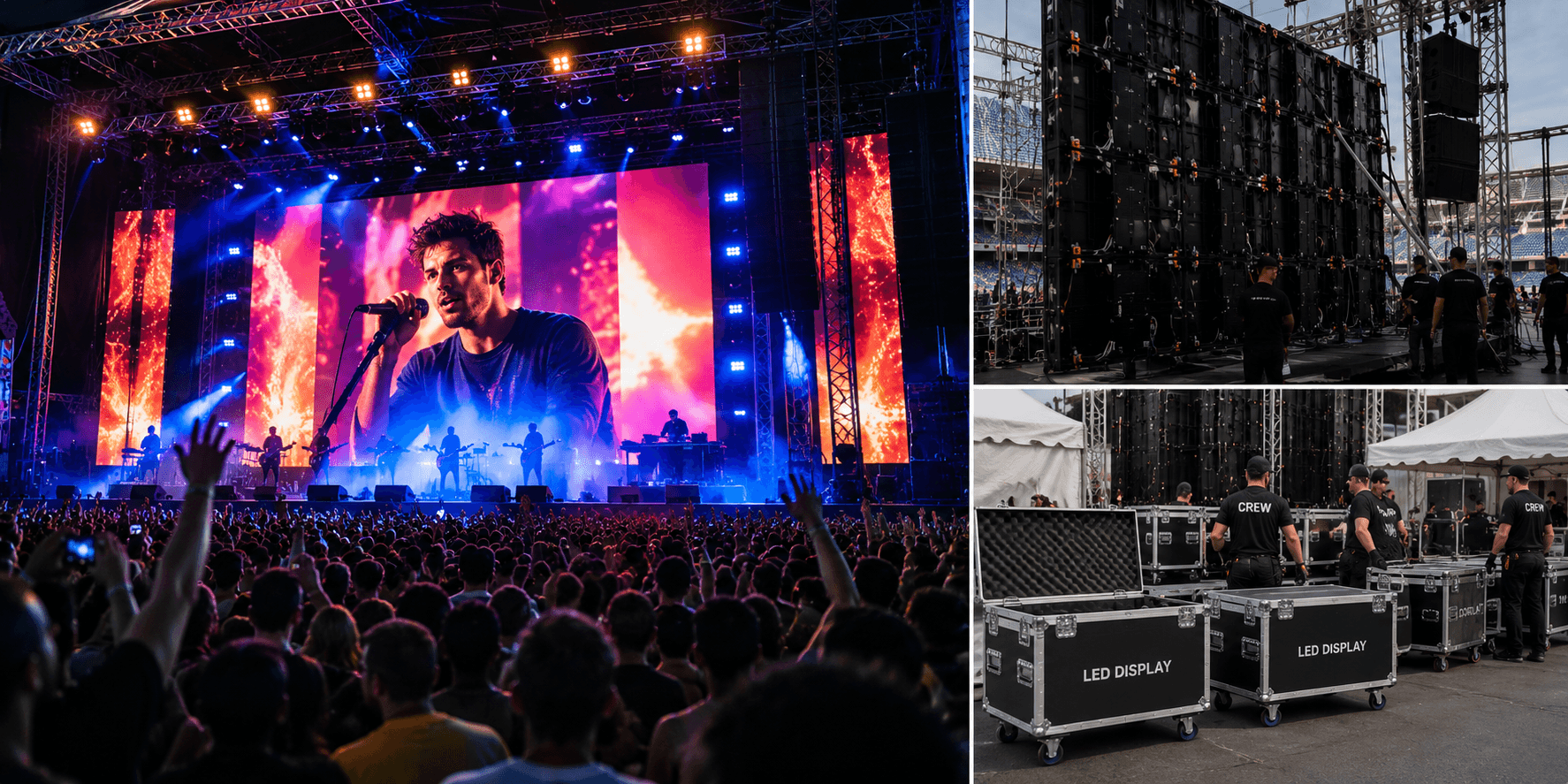
A rental LED display is a portable LED screen designed for temporary use at events and other short-term applications. Unlike fixed installations, rental displays are built to be transported, assembled, operated, and dismantled repeatedly.
They are commonly used for concerts, conferences, trade shows, festivals, product launches, corporate events, and touring productions where a permanent display is not required.
Why Businesses Choose Rental LED Displays
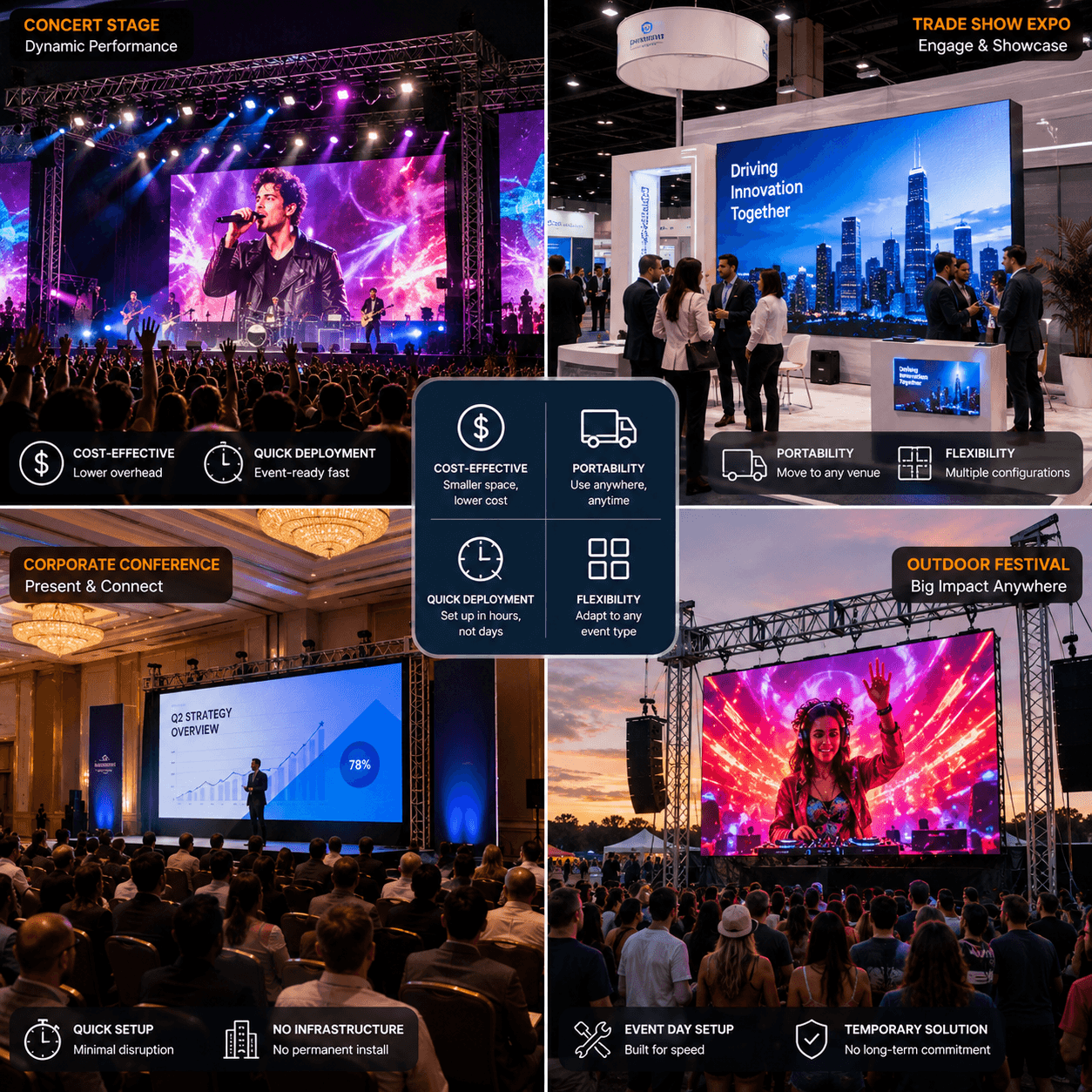
Rental displays are particularly useful when flexibility and mobility are more important than permanent installation.
Key advantages include:
- Lower upfront commitment: Businesses can rent equipment for specific events instead of purchasing a permanent display.
- Portability: Rental screens can be transported between different venues.
- Quick deployment: Modular cabinets are designed for faster assembly and dismantling.
- Flexible sizing: Display configurations can be adjusted according to the venue and event requirements.
- No long-term storage: When renting through a provider, storage and routine equipment maintenance are generally handled by the rental company.
- Event-specific support: Depending on the rental agreement, setup, technical assistance, and teardown may be included.
| Quick Insight Rental LED displays are a practical option when your display requirements change from one event or venue to another. |
What Makes Rental Displays Event-Ready?
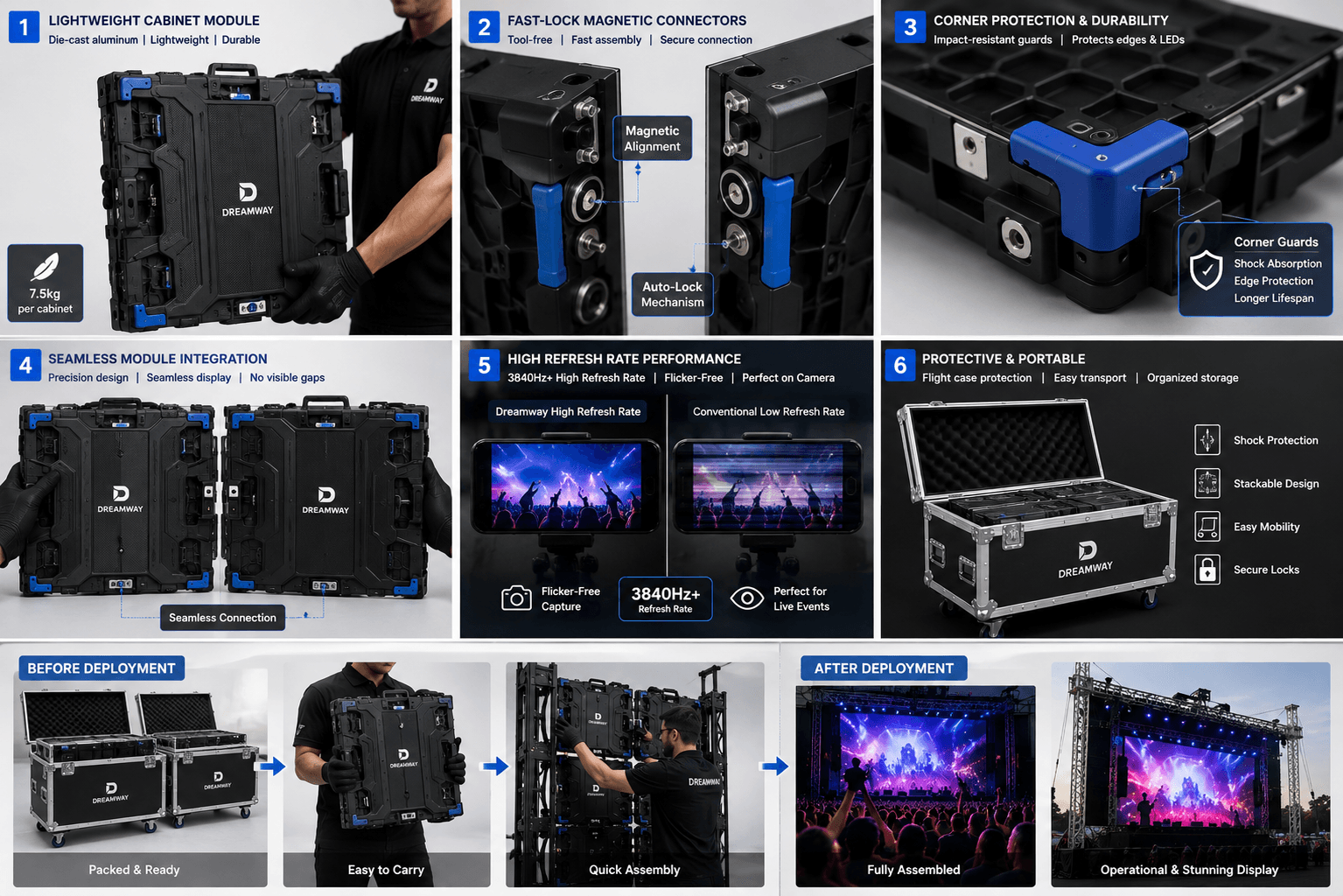
Rental LED displays are designed around the demands of transportation, repeated setup, and live events. Their cabinets are generally lighter and more modular than permanent installations, making them easier to handle and configure.
Important features can include:
- Lightweight die-cast aluminum cabinets: Die-cast aluminum construction helps reduce cabinet weight while providing the durability needed for repeated transportation, handling, assembly, and dismantling.
- Fast-lock cabinet designs: Fast-lock mechanisms allow cabinets to be connected and secured quickly, helping rental teams assemble and dismantle screens efficiently between events.
- Corner protection: Dreamway rental LED displays use GOB (Glue-on-Board) technology to deliver superior impact resistance and enhanced corner protection. This helps protect the display during repeated transportation, handling, setup, and teardown, making GOB technology well suited for high-durability rental applications.
- Modular design: Individual cabinets or modules can be removed, replaced, or rearranged when necessary, supporting different screen configurations for different venues.
- High refresh rates: Useful for live events, photography, and video production where camera flicker can be a concern.
- Appropriate brightness and weather protection: Specifications vary depending on whether the display is intended for indoor or outdoor use.
- Transport-focused construction: Rental cabinets are designed to withstand repeated movement between venues while remaining practical for fast setup and teardown.
The right pixel pitch, brightness, refresh rate, cabinet construction, and weather protection should be selected according to the viewing distance, venue, content, and event environment
How Fast Can You Set Up a Rental LED Display?
One of the main advantages of rental LED displays is faster deployment compared with permanent installations. However, setup time depends on the screen size, configuration, venue, rigging requirements, and installation team.
Before an event, the team typically checks:
- Available space and viewing areas
- Power supply and cable routes
- Rigging or mounting points
- Signal and content connections
- Weight and structural limitations
- Safety requirements
Rental displays can be ground-stacked, suspended from approved truss systems, or configured for other temporary installations. After the event, the modular design allows the display to be dismantled and transported to another location.
How Do You Maintain a Rental LED Display?
Rental LED displays are designed for repeated setup, transportation, and use across different events, so proper inspection and handling are important for reliable performance.
Before and after each event, maintenance may include:
- Equipment inspection: Check LED modules, cabinets, connectors, and power supplies for damage or performance issues.
- Cleaning: Remove dust and debris from cabinets and components according to the manufacturer’s recommendations.
- Cable and connection checks: Inspect power, signal, and data connections before operation.
- Module replacement: Damaged or malfunctioning LED modules can be replaced when necessary.
- Structural checks: Inspect mounting hardware, frames, and other components used during temporary installation.
- Testing: Test the display, signal connections, brightness, and content before the event begins.
- Safe handling and storage: Proper transportation, handling, and storage help reduce damage between events.
Depending on the rental agreement, the provider may handle equipment inspection, setup, teardown, technical support, and replacement of damaged or faulty components.
For temporary LED display projects, Dreamway provides rental LED solutions along with support for different event and application requirements.
How Do Fixed and Rental LED Displays Compare?
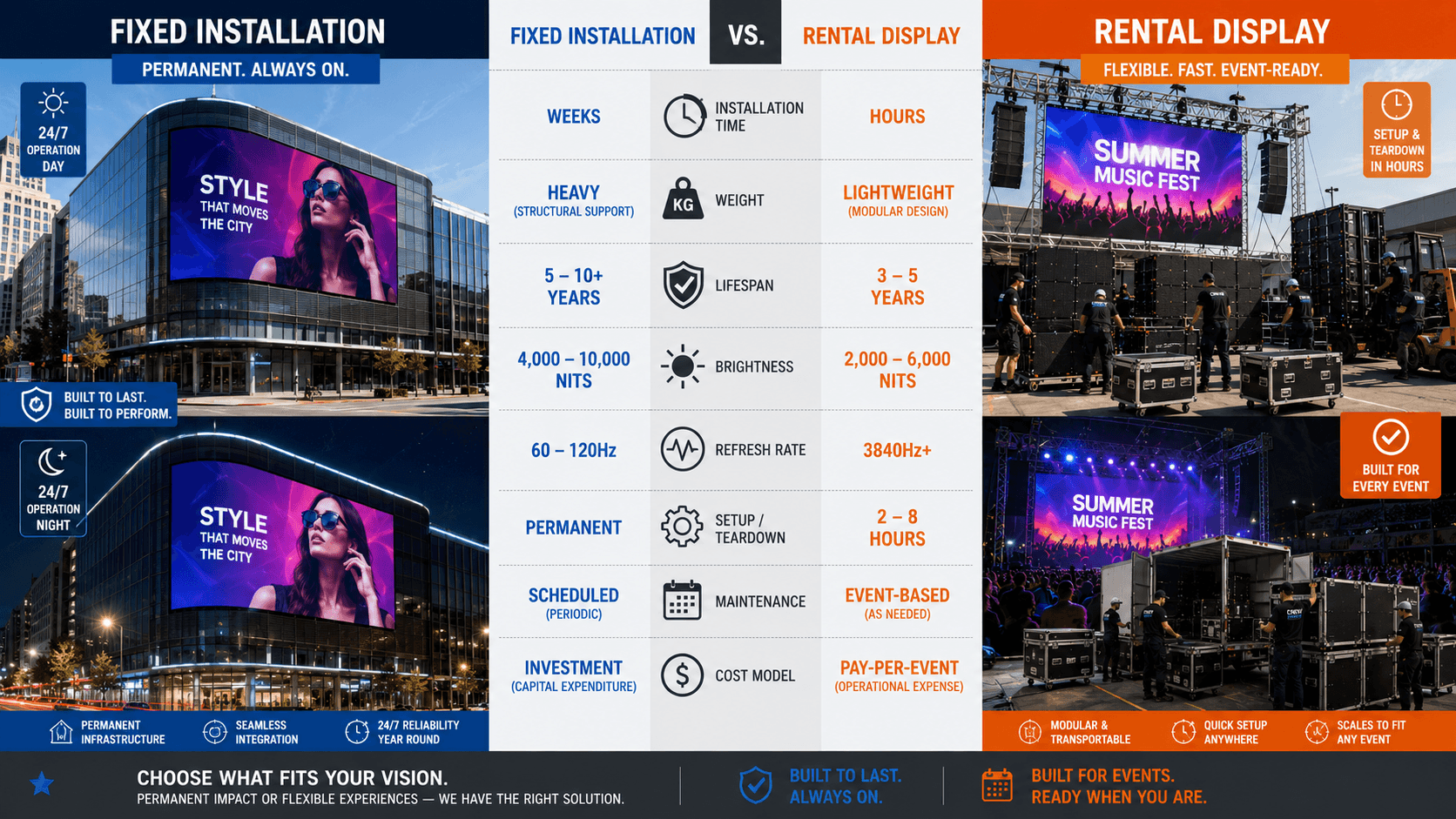
Here’s the direct comparison so you can see the differences clearly.
What Is the Difference Between Die-Cast Aluminum Rental Cabinets and Fixed Steel or Aluminum Frames?
| Fixed LED Display | Rental LED Display |
| Uses customized steel or aluminum frames designed for permanent installation. | Uses lightweight die-cast aluminum cabinets designed for transportation and repeated setup. |
| Structure is customized around site dimensions, mounting requirements, and structural conditions. | Cabinet design prioritizes portability, fast assembly, and dismantling. |
| Built for long-term structural integration. | Built for repeated handling and temporary installations. |
How Do Their Locking and Setup Designs Differ?
Fixed displays use permanent mounting and installation hardware because they are intended to remain in one location. Rental displays commonly use fast-lock cabinet designs that allow cabinets to be connected and secured more quickly for temporary installations.
This difference supports the primary purpose of each display: permanent integration for fixed systems and faster deployment for rental systems.
| Factor | Fixed Installation | Rental Display |
| Primary Use | Permanent, long-term installation | Temporary events and changing venues |
| Cabinet/Frame Construction | Customized steel or aluminum frames | Lightweight die-cast aluminum cabinets |
| Locking System | Permanent mounting and installation hardware | Fast-lock cabinet designs |
| Corner Protection | Designed for permanent installation requirements | Protective features for repeated transport and handling |
| Service Access | Front or rear service access, depending on installation design | Modular access for maintenance and component replacement |
| Weatherproofing | Weather-resistant construction and appropriate IP protection for outdoor use | Weather protection varies by indoor or outdoor rental application |
| Cabinet Weight | Generally heavier due to permanent structural requirements | Generally lighter for easier transportation and handling |
| Setup/Teardown | Professional installation; no routine teardown | Designed for repeated setup and dismantling |
| Installation Time | Requires site planning, structural work, and professional installation | Generally faster deployment, depending on screen size and venue |
| Maintenance | Scheduled, long-term maintenance | Inspection and servicing between or during events |
| Configuration | Customized to the permanent location | Modular configurations can be adapted to different venues |
| Best Suited For | Permanent venues, storefronts, stadiums, corporate spaces, and long-term installations | Concerts, trade shows, conferences, festivals, touring productions, and temporary events |
The physical construction reflects each display’s intended use: fixed LED displays prioritize permanent integration, customized structures, service access, and environmental protection, while rental displays prioritize lightweight construction, fast locking, portability, and repeated setup and teardown.
Which LED Display Is Right for Your Project?
The right choice depends on how you plan to use the display, where it will be installed, and how often you need it.
When to Choose Fixed Installation
Choose a fixed LED display when you need a permanent solution for long-term or frequent use.
- The display will remain in one location.
- You need frequent or continuous operation.
- You require a customized size, shape, or mounting solution.
- Consistent performance and availability are important.
- The display will become part of your permanent infrastructure.
When to Choose Rental LED Displays
Choose a rental LED display when your needs are temporary, mobile, or likely to change between events.
- You need a display for a specific event or short-term use.
- Your events take place at different venues.
- Portability and quick setup are important.
- You need flexibility in screen size or configuration.
- You want to avoid permanent installation or a large upfront investment.
Can You Use a Hybrid Approach?
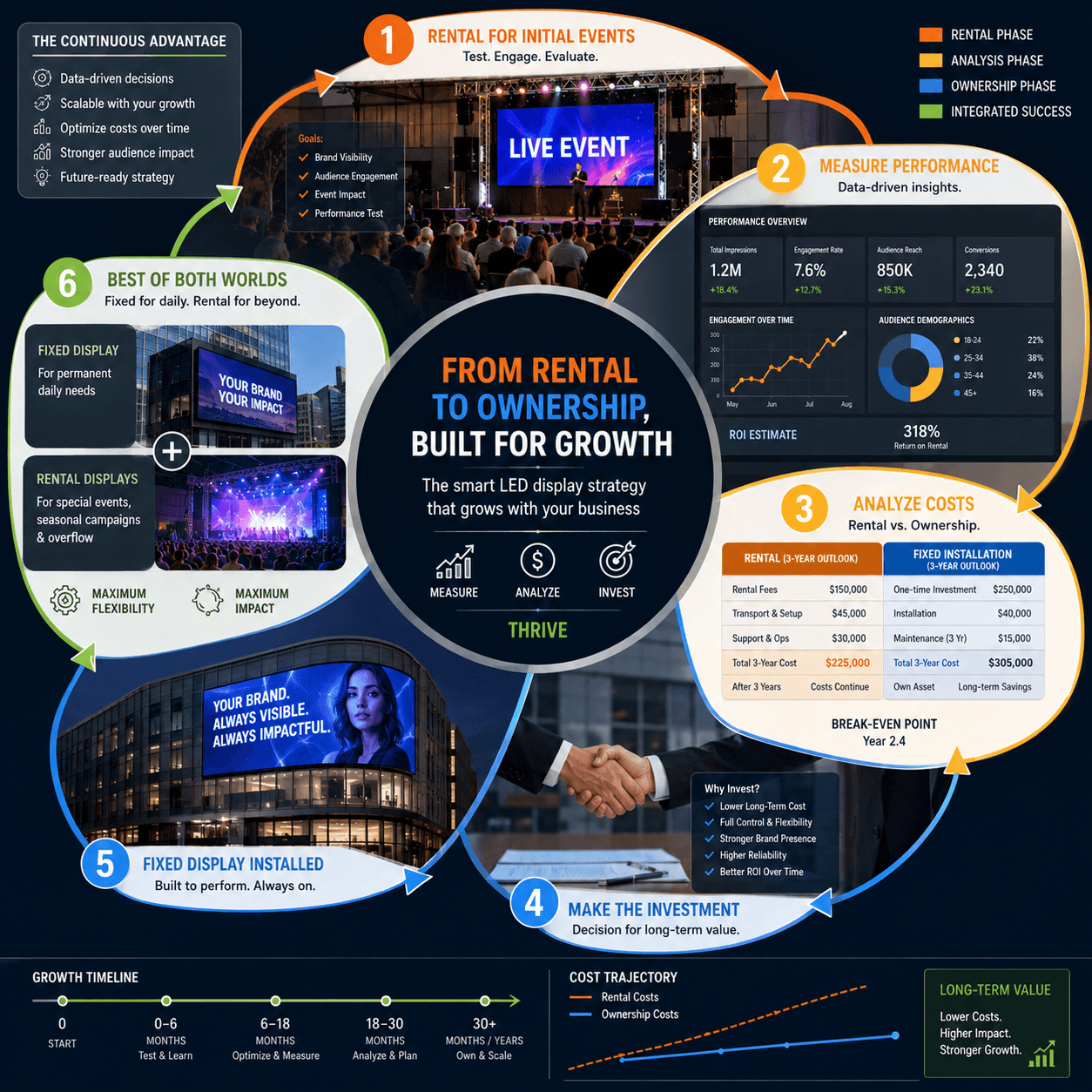
If you’re unsure whether to invest in a fixed LED display, a hybrid approach can give you more flexibility. You can start with rental displays for temporary needs, measure their performance and costs, and use those results to determine when a permanent installation makes sense.
How Does the Rental-to-Ownership Strategy Work?
The rental-to-ownership approach allows businesses to test their LED display needs before making a larger investment. The process can develop through several stages:
- Start with rental: Use rental displays for initial events, campaigns, or temporary applications to test visibility, audience engagement, and event impact before committing to a permanent installation.
- Measure performance: Track results such as audience engagement, reach, conversions, and operational performance. The infographic highlights an example of 1.2 million engagements, a 7.6% engagement rate, 850,000 audience reach, and 2,340 conversions during the rental phase.
- Analyze costs: Compare recurring rental expenses with the potential cost of ownership. In the illustrated example, rental costs reach approximately $52,500 in the first year, while a fixed installation is estimated at approximately $55,500, including installation and maintenance considerations.
- Evaluate the investment: The example shows an estimated 318% ROI from rental and identifies a 2.4-year break-even point, helping businesses determine when transitioning to ownership may become financially practical.
- Move to fixed installation: Once display requirements become more frequent or long-term, a permanent LED display can provide consistent availability without repeated rental and transportation costs.
- Keep rental for temporary needs: Even after installing a fixed display, rental screens can support special events, seasonal campaigns, additional venues, or temporary expansions.
When Should You Move From Rental to Ownership?
The decision does not have to happen immediately. A gradual timeline can help businesses evaluate their needs before making a permanent investment:
- 0–6 months: Test and learn through initial rental events.
- 6–18 months: Optimize the display strategy and measure performance.
- 18–30 months: Analyze results, compare costs, and plan the next stage.
- 30+ months: Consider ownership and scale the permanent display strategy when usage and long-term value justify the investment.
This approach allows businesses to make the decision based on actual performance, rental frequency, cost trends, and long-term requirements rather than assumptions. It also provides the flexibility to combine fixed and rental displays when both solutions serve different business needs.
Conclusion
Neither fixed nor rental LED displays are the right choice for every project. The better option depends on how often you’ll use the display, whether it needs to remain in one location, how long you plan to use it, and your available budget.
Fixed displays are generally suited to permanent, long-term applications, while rental displays offer greater flexibility for temporary events and changing locations. By considering your usage, installation requirements, and long-term costs, you can choose the solution that best fits your project.
Dreamway offers both fixed and rental LED display solutions to support different applications and project requirements.
FAQs
What’s the difference between fixed installation and rental LED displays?
Fixed LED displays are permanent installations designed for continuous 24/7 operation at a single location, while rental LED displays are temporary, portable systems for short-term event deployment.
How Do Rental LED Cabinets Differ From Fixed LED Display Frames?
Rental LED cabinets are lightweight and modular for transportation, quick assembly, and repeated teardown, while fixed LED displays use customized steel or aluminum frames designed for permanent installation and site-specific structural requirements.
How Much Does It Cost to Install a Fixed LED Display?
Fixed LED displays require an upfront investment that may include the display, installation, structural or electrical work, and ongoing maintenance. Total costs vary based on screen size, specifications, installation requirements, and project complexity.
How Much Does It Cost to Rent an LED Display?
Rental LED display costs vary based on screen size, pixel pitch, rental duration, indoor or outdoor requirements, transportation, setup, teardown, and technical support.
How long does it take to install a fixed LED display?
Fixed LED display installation typically takes 4–9 weeks from planning to full operation. The timeline can vary depending on screen size, site conditions, structural work, electrical requirements, permits, and installation complexity.
How long does it take to set up a rental LED display?
Rental LED displays can often be set up within a few hours, depending on the screen size, configuration, venue, rigging requirements, and installation team. The setup process typically includes assembly, power and signal connections, testing, and final safety checks.
Which option is better for sports venues and stadiums?
Both fixed and rental LED displays work for stadiums, but fixed installation is better for permanent scoreboards and perimeter advertising, while rental is better for temporary special events and touring productions.